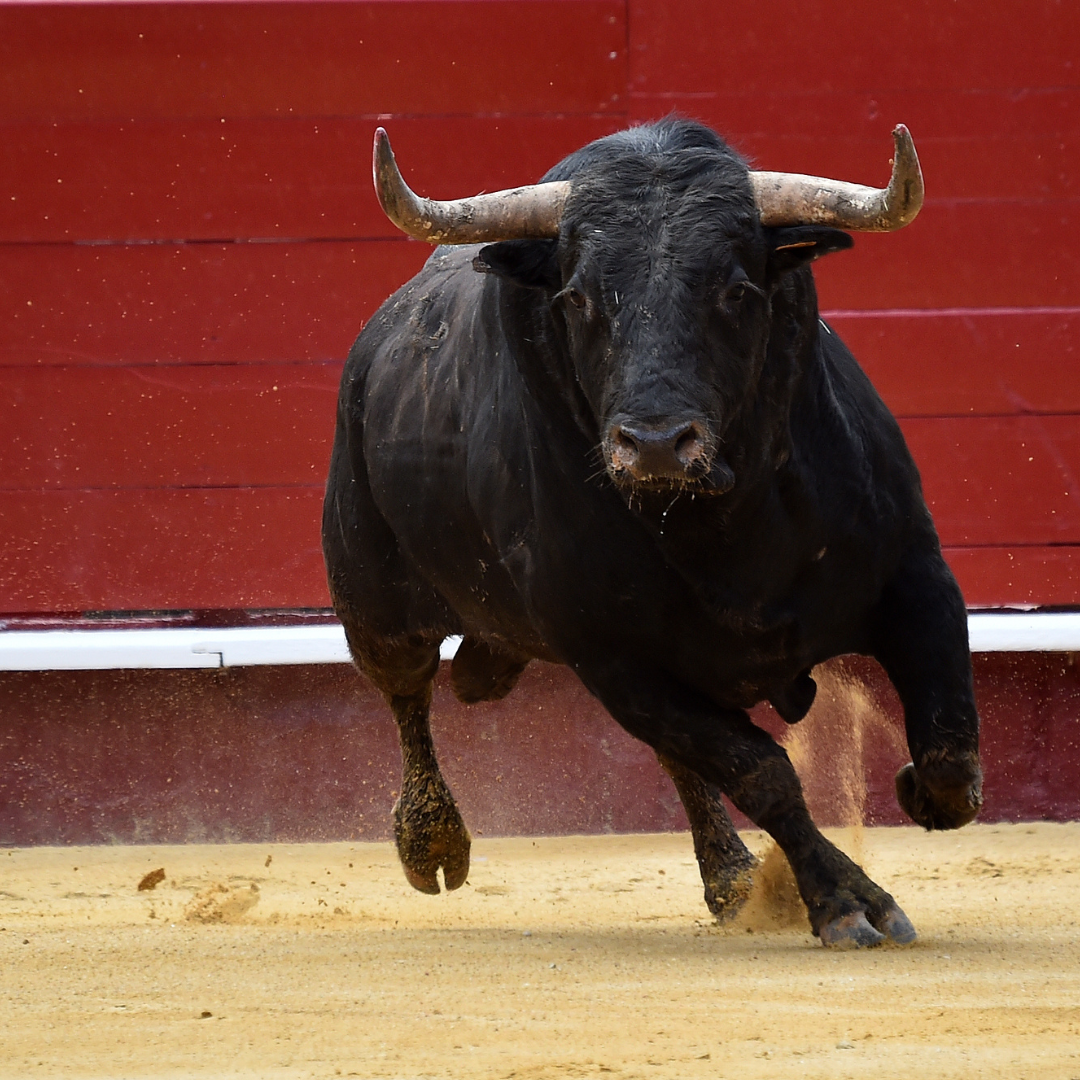
Is it the RED or the RUMBLE!!!
I have always been curious about different things, especially myths, and like everybody else, I do my research. It has led me to find out that most of these myths are untrue!!! Remember all those cartoons you watched as kids where bulls are always charging towards that guy holding a red cape in the arena or those films that show a bull running towards the guy in the ring? A classic scene, right?
I loved watching those scenes, but I was left wondering why the bulls were always angry with the guy holding the red cape. So I discovered something interesting! Strap in, there is a rumble ahead!
The Red Cape Myth
The idea that bulls get angry at the sight of red likely comes from bullfighting traditions, especially in Spain. In these events, matadors wave a large piece of red cloth, known as a muleta, to provoke the bull into charging. Over time, the vivid imagery of an enraged bull chasing a red cape became ingrained in popular culture. Movies, cartoons, and even stories passed down through generations have all reinforced this belief.
Can Bulls Even See Red?
Here’s the twist: bulls, like many other mammals, are colorblind to red! Scientists have studied the vision of bulls and found that they are dichromatic. It means that they can only perceive two color spectrums.
We humans typically have three types of color receptors in our eyes that allow us to see a wide range of colors. Bulls, on the other hand, only have two types of receptors, which makes it impossible for them to distinguish between red and other colors like green or yellow. To a bull, that bright red cape probably looks more like a dull grayish or brownish hue. So, if bulls can’t even see the color red properly, why do they seem so angry when it’s waved in front of them?
The Real Reason Bulls Charge
The key to understanding bull behavior lies not in color but in motion. Bulls are naturally territorial and react strongly to fast movements. In bullfighting, the matador waves the cape with quick, dramatic motions, which catches the bull’s attention. This movement triggers a bull’s instinct to charge, a behavior rooted in its evolution and survival mechanisms.
In the wild, bulls or their ancestors would have encountered threats that moved rapidly, such as predators or rival males. Over time, they developed a response to charge at sudden movements to defend their territory. When they see something moving rapidly in front of them, whether it’s a red cape, a blue shirt, or even a piece of cardboard, they instinctively react to it.
In essence, it’s the motion of the cape, not its color, that makes bulls charge. When the matador waves the cape, the bull perceives it as a potential threat or challenger and responds with aggression. This behavior is consistent regardless of the color of the cape. It could be red, white, or even rainbow-colored, and the bull would still react the same way.
Other Animal Myths
I also discovered that the myth bulls hate red is just one of many misconceptions we have about animals. For instance, many people think that owls are wise simply because of their large eyes and calm demeanor, when in fact, they are no more intelligent than other birds. Similarly, the idea that dogs see only in black and white is another myth; they see a limited range of colors, much like bulls.
What these myths have in common is that they often stem from human interpretations of animal behavior without scientific backing. When we see a bull charging at a red cape, it’s easy to jump to conclusions based on what we think we understand about color and emotion. However, animals perceive the world very differently from us, and what seems logical to us may not apply to them.
Why Does This Myth Persist?
You might be wondering why this myth persists in this age and time. Well, part of the reason lies in how we interpret and simplify the world around us. The image of a bull charging at a red cape is visually striking and easy to remember. It’s been repeated so many times in media and culture that it has become accepted as fact. Moreover, it gives us simple explanations for complex behaviors. Understanding animal behavior can be quite complicated, and it’s easier to believe that a bull hates red than to delve into the intricacies of how motion and territorial instincts drive their actions. This tendency to prefer straightforward stories over nuanced truths is why many animal myths endure, even in the face of scientific evidence.
This myth also highlights the importance of questioning what we hear and see, especially when it comes to the natural world. Just because something has been widely believed for centuries doesn’t mean it’s true. By exploring the science behind animal behavior, we can replace myths with facts, leading to a more accurate understanding of the creatures we share our planet with.
Conclusion: It's Not the Red, It's the Movement!
In the end, bulls don’t charge because they hate the color red; they charge because of the movement that catches their attention. Bulls are colorblind to red and see the world in shades of blues and yellows, so the red cape is just a part of the scenery to them. Their reaction is driven by instincts and movement, not by color.
So, the next time you see a bull in action, remember: it’s not the color that riles them up; it’s the thrill of the chase!
Leave us a Comment